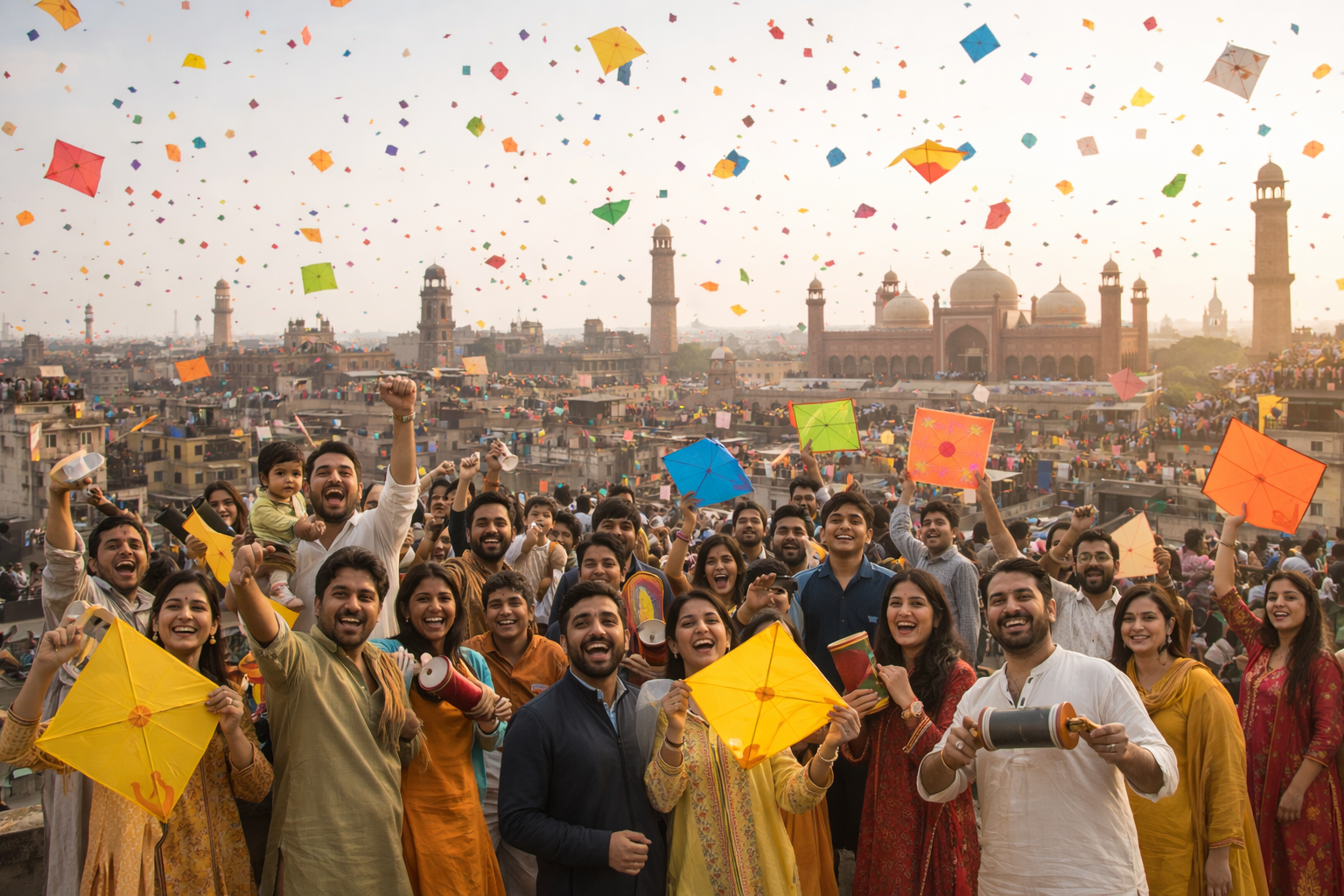


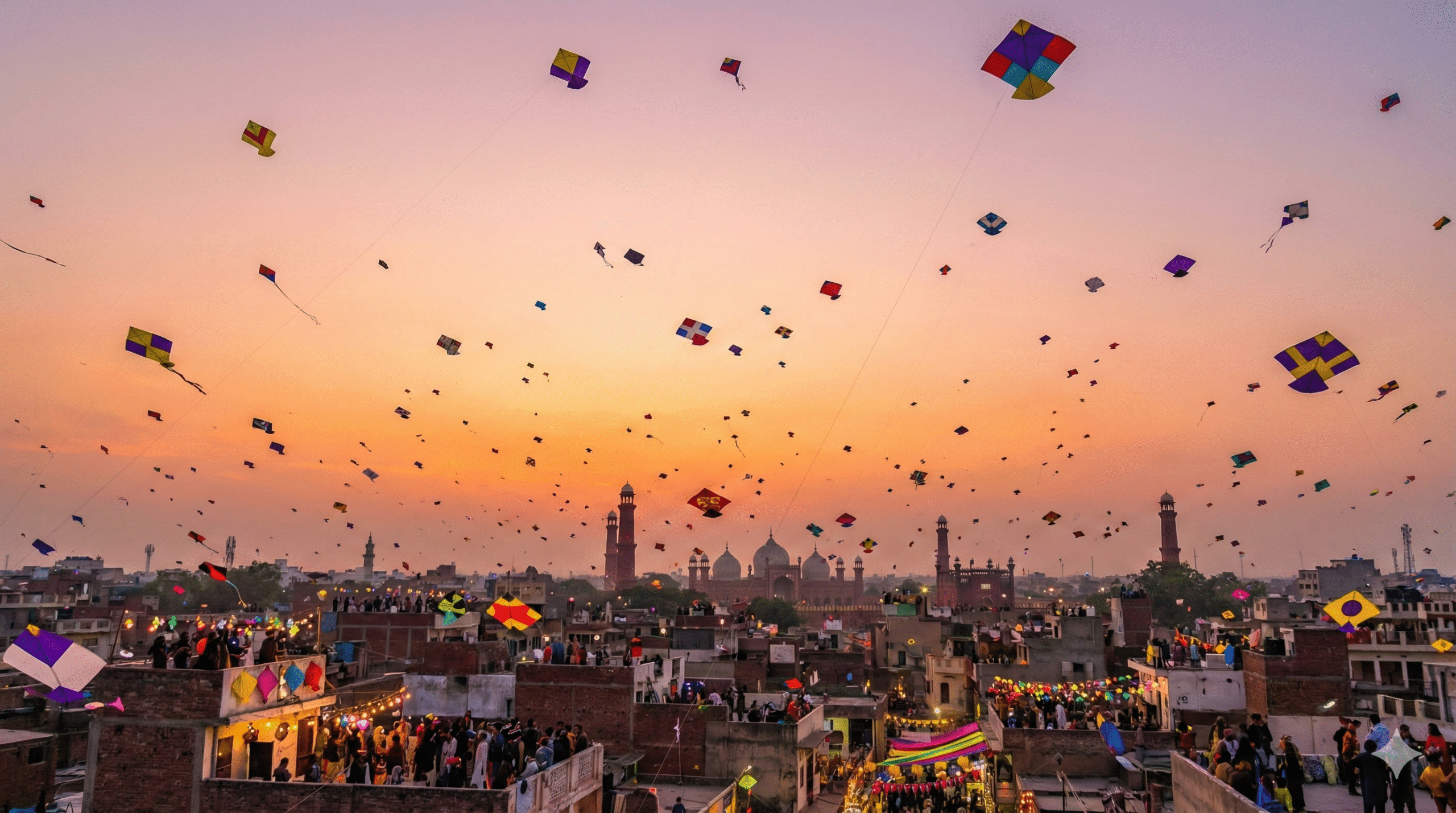
Let’s stop calling Basant a “festival.” Calling it a festival puts it in the same category as a school funfair. Basant is not just a festival; it is a micro-economy. It is a tourism engine. And for an advertiser like me, it is perhaps the single most potent organic “Brand Pakistan” campaign we have, and we spent nearly two decades trying to kill it.
We often look for complex foreign investment schemes to jump-start our economy, yet we sit on a goldmine of indigenous culture that has proven to be economically productive. My argument is simple: The moral panic around Basant ignored the economic reality. A safe, regulated Basant isn’t just about “fun”; it is a massive injection of liquidity into the local economy and a billboard for Pakistan on the global stage.
The Evidence: The Economics of the Sky (2026 Data)
With the government-sanctioned revival of Basant in Lahore this week (February 6–8, 2026), we finally have fresh hard data. The numbers are not just impressive; they are an economic shockwave.
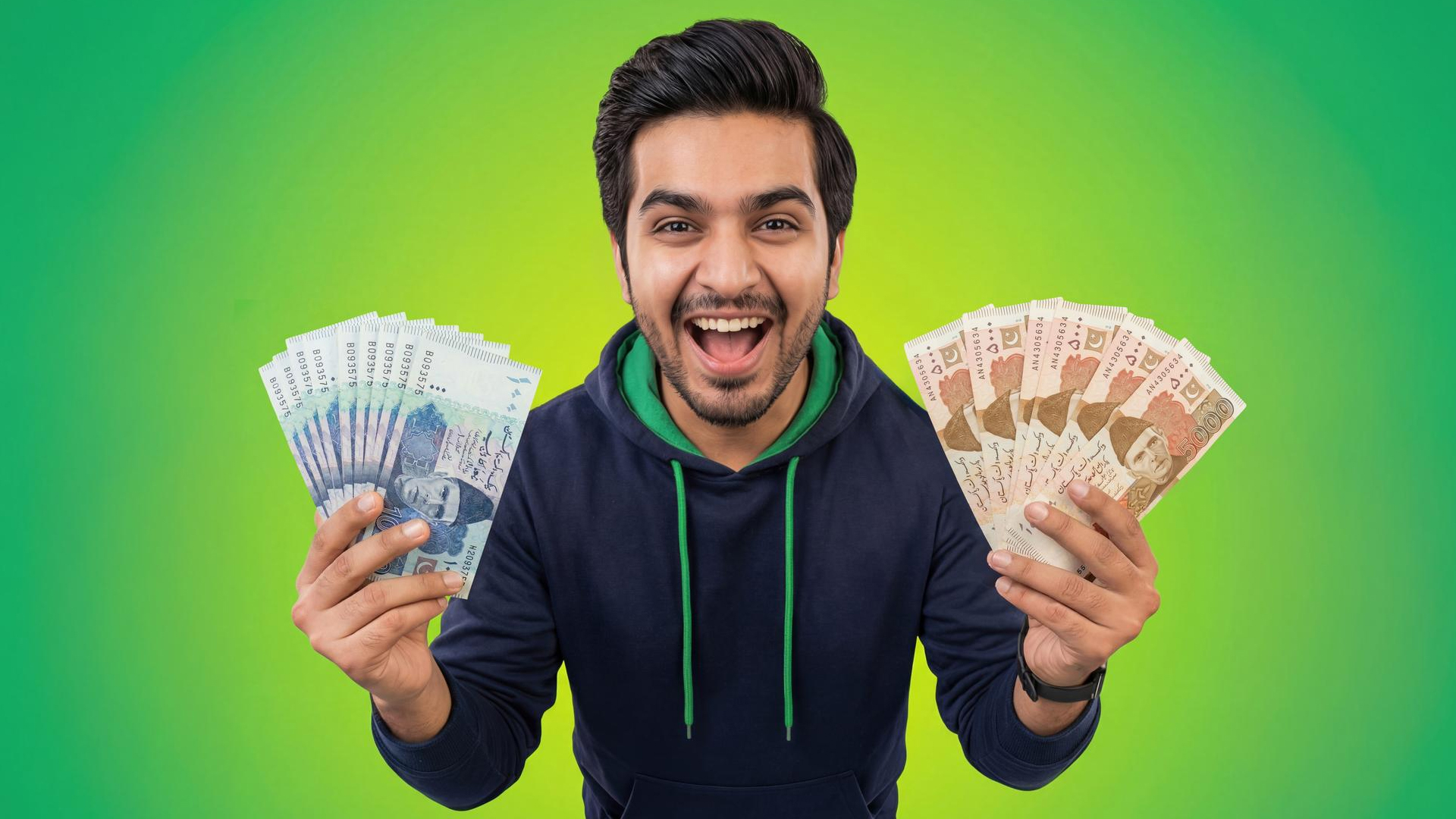
- The 20 billion rupee ecosystem: Market analysts and reports estimate the total economic activity triggered by this three-day window, spanning tourism, transport, hospitality, and retail, which is assumed to hit the PKR 20 billion mark (Source: Suno News / Market Analysts, Feb 2026).
- 1.2 billion in direct sales (Before it even started): According to Malik Faizan Ahmed, Legal Advisor for the Kite Flying Association (KFA), the sale of kites and string (dor) crossed PKR 1.22 billion in just the four days leading up to the event (Source: Daily Times, Feb 5, 2026).
- Day 1 Sales: PKR 160 million.
- Day 4 Spike: Sales hit PKR 680 million in a single day.
- Volume & Velocity: On the fourth day of sales alone, over 1 million kites and reels were sold in Lahore markets like Mochi Gate and Ichhra (Source: KFA / Minute Mirror, Feb 2026).
- Premium pricing power: Demand is inelastic. A high-quality, two-piece panna (spool) of string is selling for PKR 12,000 to PKR 15,000 (Source: Daily Times / Market Survey). This proves consumers are willing to pay a premium for this experience, driving revenue for skilled craftsmen.
The Advertiser’s Lens: Brand Pakistan

As an advertiser, I see Basant as our Songkran or Mardi Gras. It is immersive. You don’t just watch Basant; you stand on a rooftop, cut a finger, eat the food, and hear the roar. That “experiential” marketing is what modern tourists pay top dollar for.
- Soft Power: In a world where Pakistan often battles negative headlines, Basant offers visuals of joy, color, and music. It is Instagrammable, shareable, and humanizes us to the world.
- Corporate Sponsorship: The engagement levels are unmatched. From telecom to FMCG, brands are starving for events that capture the youth (64% of our population). Basant is a native platform for brand integration, not just logos on a wall, but meaningful experiences.
- Tourism: Just as people travel to Brazil for Carnival or India for Holi, Basant is our unique selling proposition (USP). It is an experience you cannot download; you have to be there.
The safety concerns regarding the sharp glass-coated strings are real and tragic. But the solution to a traffic accident isn’t to ban cars; it’s to enforce traffic laws.
The 2026 numbers prove the concept: PKR 1.2 billion in direct sales in just 96 hours.
We need to treat Basant like the industry it is. Regulate the string manufacturing, zone the flying areas, and police the safety standards. If we can do that, we don’t just get our festival back. We get a thriving business ecosystem that reminds the world and ourselves that Pakistan is a place of vibrancy, not just survival.
It’s time to let the economy fly.