















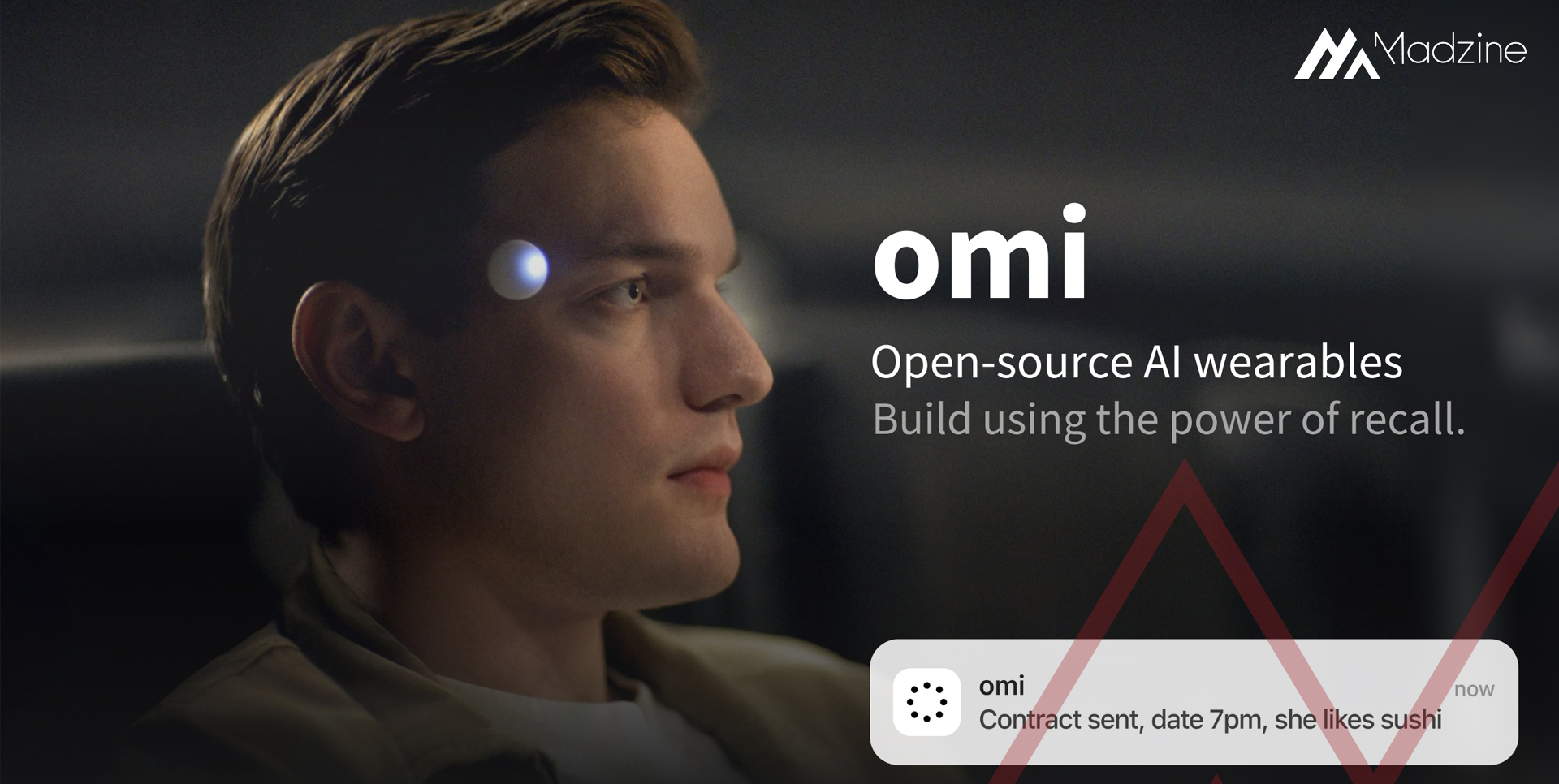
In the rapidly evolving landscape of AI wearables, two devices have recently captured the tech world’s attention: Omi AI and the Humane AI Pin. Both promise to revolutionise how we interact with artificial intelligence in our daily lives, but they approach this goal in distinct ways.
Omi AI: The Mind-Reading Companion
Omi AI, developed by Based Hardware, is a $89 wearable device that aims to integrate AI into users’ daily routines seamlessly. This small, coin-sized disc can be worn as a necklace or attached to the side of the head, claiming to offer capabilities that seem straight out of science fiction.
Key features of Omi AI include:
- Always-on listening and processing of conversations
- Real-time transcription and summarization
- Potential for brain-interface technology
- Open-source platform with an app marketplace
- Extended battery life of up to 3 days
Omi’s most intriguing feature is its purported ability to read users’ brain waves, potentially eliminating the need for wake words or manual input. However, this capability is still in its early stages and remains to be fully verified.
Humane AI Pin: The Screenless AI Assistant
The Humane AI Pin, created by former Apple employees, takes a different approach to AI wearables. This device is designed to be a potential smartphone replacement, focusing on voice and gesture-controlled interactions without a traditional screen.
Key features of the Humane AI Pin include:
- Advanced GPT-4 AI technology
- Voice and gesture control
- Projected laser display for visual feedback
- Capabilities like calls, language translation, and health tracking
- Stylish, compact design
The Humane AI Pin aims to reduce screen time while still providing essential smartphone functionalities, enhanced by AI capabilities.
Comparing the Two
While both devices seek to integrate AI into wearable technology, they differ in their approach and target use cases:
- Form Factor: Omi AI is a small disc that can be worn in multiple ways, while the Humane AI Pin is designed as a clip-on device.
- Interface: Omi AI focuses on voice interaction and potential brain-interface technology, whereas the Humane AI Pin utilizes voice, gestures, and a projected display.
- AI Integration: Both devices leverage advanced AI, with Omi using GPT-4o and Humane employing GPT-4 technology.
- Openness: Omi AI boasts an open-source platform with a growing app marketplace, while the Humane AI Pin appears to have a more closed ecosystem.
- Price Point: Omi AI is priced at $89, making it significantly more affordable than most AI wearables on the market.
Expert Opinions and Concerns
The emergence of these AI wearables has sparked both excitement and concern among experts. Imtiaz Noor, CEO of Orange Fox, raises important points about the limitations of current AI wearable technology:
Most AI will happen off the device. So it’s never going to be instant. It will be dependent on coverage and networks. putting stuff directly into your brain is not even medically possible unless we are talking about bone-conduction speakers. Even chat GPT has hitches, A LOT of them.
These observations highlight the potential challenges faced by both Omi AI and the Humane AI Pin in delivering seamless, instantaneous AI interactions.
On the other hand, Eeshah Javed, a Linguist and Copywriter, expresses concerns about the societal impact of such devices:
It costs less than coffee but is costly for the human brain! Omni would help people with special needs, but for a common person, it would destroy their linguistic and cognitive learning and understanding abilities.
This perspective underscores the need to consider the long-term effects of relying heavily on AI assistants for daily tasks and communication.
As AI wearables like Omi AI and the Humane AI Pin continue to evolve, they promise to reshape our interaction with technology and artificial intelligence. While these devices offer exciting possibilities for enhancing productivity and accessibility, it’s crucial to approach their adoption with a balanced perspective, considering both their potential benefits and the concerns raised by experts in the field.
The coming years will likely see further advancements and refinements in AI wearable technology, potentially addressing current limitations and concerns. As consumers, it’s essential to stay informed and critically evaluate how these devices may impact our lives and society as a whole.